supabase
The Postgres development platform. Supabase gives you a dedicated Postgres database to build your web, mobile, and AI applications.
⭐ 101,848 stars on GitHub · 🍴 12,294 forks · 📜 License: apache-2.0 · 💻 Language: TypeScript
What is supabase?
A Firebase-style backend with Postgres at the center, Supabase gives you the speed of a managed app platform without forcing you into a proprietary database model. Its differentiator is simple: you get auth, APIs, realtime, storage, functions, and vector search built around standard PostgreSQL.
Main components
- Dedicated PostgreSQL database for web, mobile, and AI application backends
- Built-in authentication and authorization using JWT-based GoTrue
- Auto-generated REST APIs through PostgREST
- GraphQL API support via the
pg_graphqlPostgreSQL extension - Realtime subscriptions for Postgres inserts, updates, and deletes over WebSockets
- File storage API with Postgres-backed permissions and S3-compatible storage workflows
- Edge Functions and database functions for server-side logic
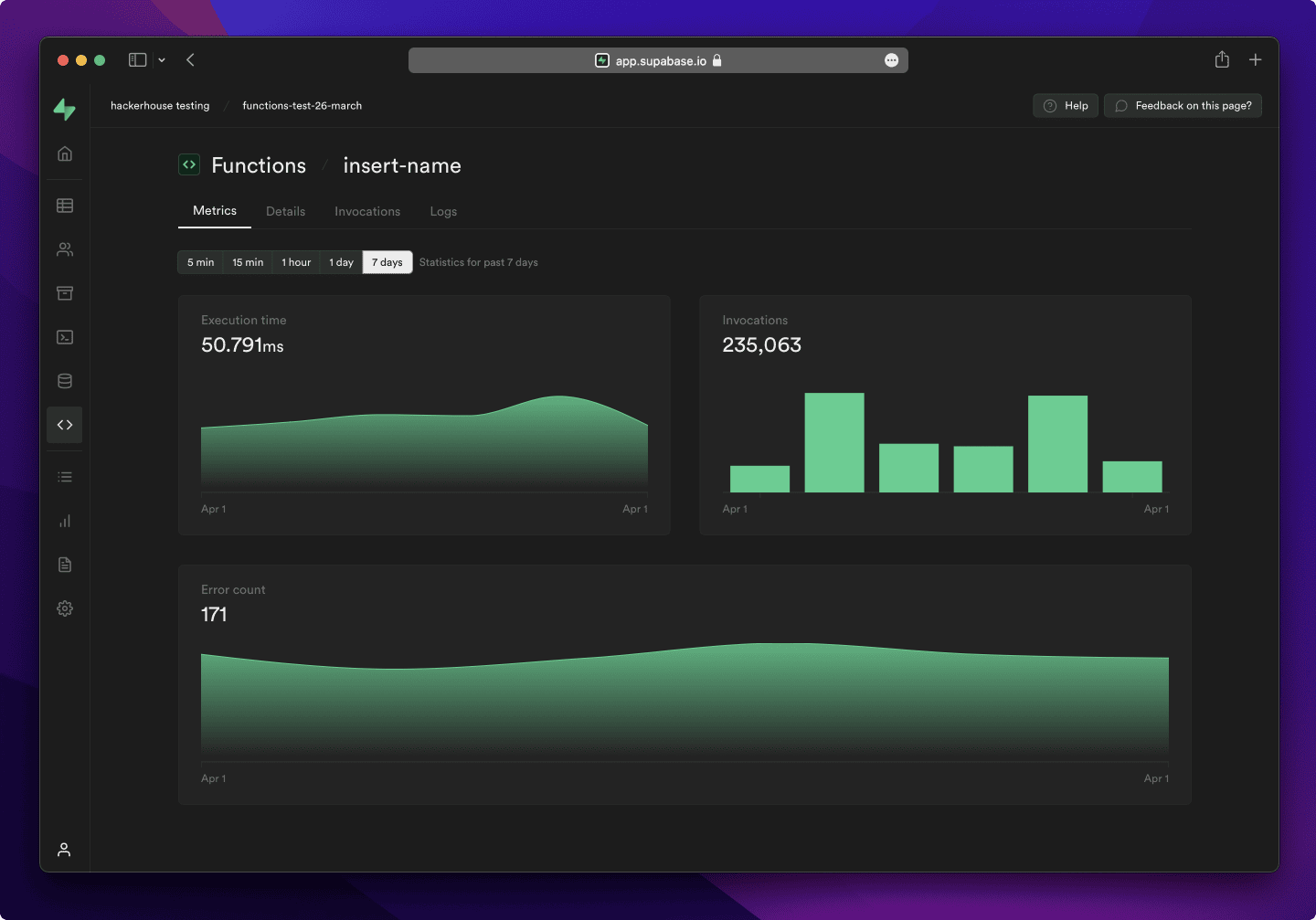
- Dashboard and metadata APIs for managing schemas, roles, queries, and project configuration
- AI and embeddings toolkit using Postgres vector capabilities
Clear use cases
- Build a SaaS backend with Postgres, user auth, file uploads, and instant APIs
- Replace Firebase for apps that need SQL, relational data modeling, and stronger data portability
- Ship a mobile or web app quickly without writing a custom CRUD API layer
- Add realtime collaboration, dashboards, notifications, or live activity feeds on top of Postgres
- Prototype AI features such as semantic search, recommendations, or RAG pipelines using embeddings
- Run a local development stack that mirrors production and can be self-hosted when needed
The biggest strength is Postgres-first developer velocity — Supabase wraps mature open source components into a cohesive platform while keeping your data in a database you can inspect, tune, migrate, and operate independently. Compared with commercial backend-as-a-service platforms, the value is not just lower lock-in; it is that your core application model stays in PostgreSQL instead of being reshaped around a vendor-specific document store or opaque API layer.
Supabase is not the lightest thing to self-host, and teams should expect to operate several moving parts: Postgres, Realtime, Auth, Storage, Kong, functions, and the dashboard. But that complexity buys you a serious backend platform rather than a toy starter kit. For teams already comfortable with containers, SQL, migrations, and infrastructure monitoring, self-hosting Supabase can provide a strong balance between fast product development and long-term architectural control.
Best for product teams, full-stack developers, and platform engineers who want a Firebase-like experience while keeping PostgreSQL, open source infrastructure, and self-hosting options at the core.
Topics: the project is tagged with popular topics:
- 🏷️
ai - 🏷️
alternative - 🏷️
auth - 🏷️
database - 🏷️
deno - 🏷️
embeddings - 🏷️
example - 🏷️
firebase - 🏷️
nextjs - 🏷️
oauth2
📸 Screenshots


Quick install
See the README for detailed install instructions. Most projects support Docker — if the repo has a Dockerfile, use:
git clone https://github.com/supabase/supabase.git
cd supabase
docker build -t supabase .
docker run -d -p 8080:8080 supabase
Minimum system requirements
| Component | Recommended |
|---|---|
| RAM | 4096 MB |
| CPU | 2 vCPU |
| Disk | 50 GB SSD |
| OS | Ubuntu 22.04 LTS / Debian 12 |
| Docker | 24.0+ |
⚡ Deploy fast on VSIS
Use the VSIS VPS Standard 4GB RAM / 2 vCPU / 50GB SSD (~150k/tháng) plan from VSIS.NET — high-speed VN-based VPS, 24/7 support, ideal for running supabase smoothly.
🎯 Benefits:
- One-command
docker compose up -ddeploy in 2 minutes - Dedicated IPv4, root access, unmetered domestic bandwidth
- Daily snapshot backup
- Free install assistance from the VSIS team
👉 See matching VPS plans at vsis.net
Resources
- 🔗 GitHub: supabase/supabase
- 🌐 Homepage: https://supabase.com
- 📚 Official docs: see README in the repo
- 💬 Community: GitHub Issues + Discussions
Article compiled from GitHub data on 05/05/2026. Star/fork counts may have changed — see live numbers via the GitHub link.
